Over 120,000 sold last month Limited availability

Hormonal facial hair: why
it keeps getting worse
no matter what you try —
and what to do instead!

I've seen hundreds of women with hormonal facial hair that resists everything. The real reason it keeps getting worse isn't what they think. And the hair-removal industry has every reason not to tell you.

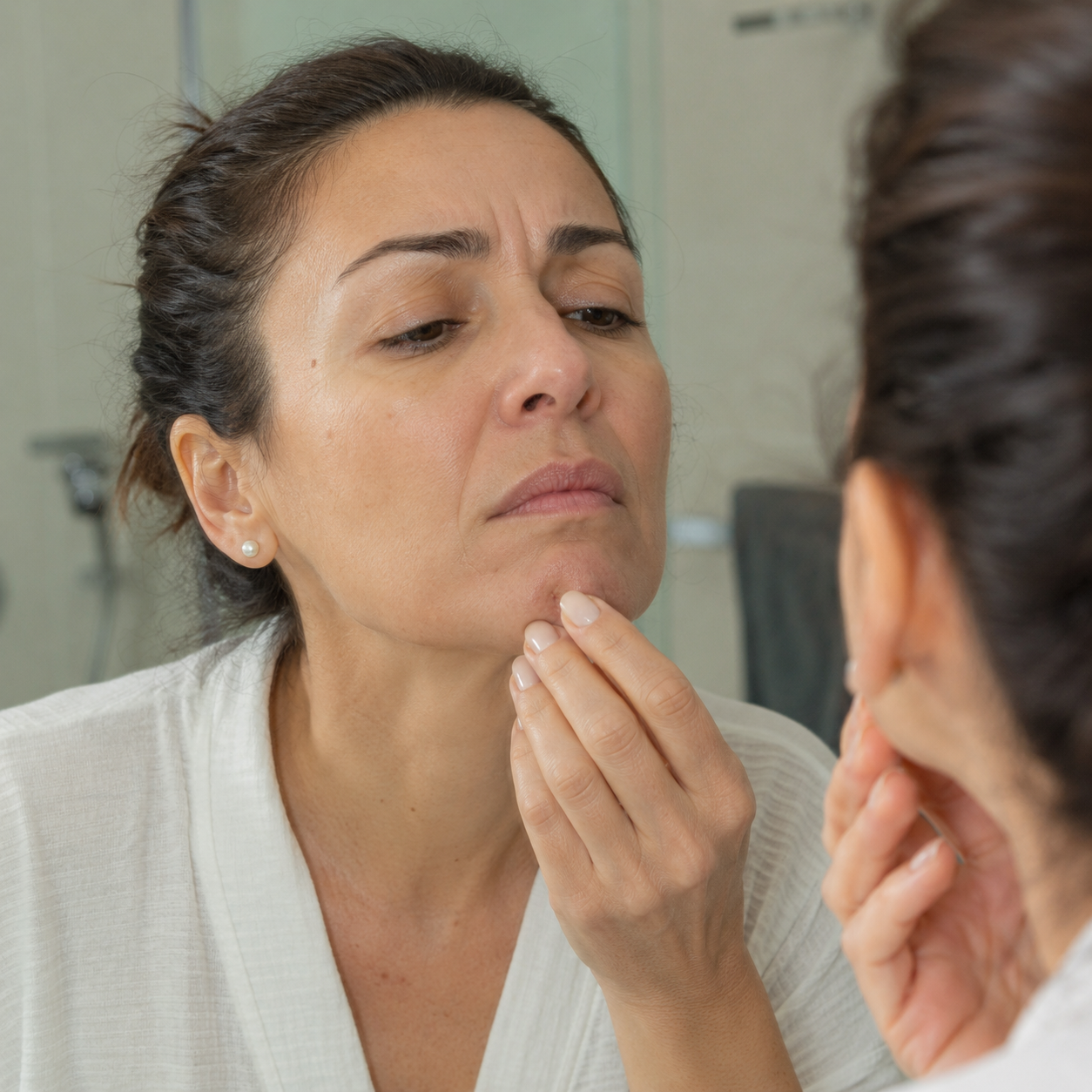
Woman examining chin hair in the mirror

She wakes up at 5:30 a.m. Locks the bathroom door. Pulls the tweezers out of the same drawer as always.

Forty-five minutes in front of the magnifying mirror. One by one. She already knows she'll be late for work. She already knows she'll have to start over by noon.

She's already tried waxing. The razor. Threading. Laser — $4,200, twelve sessions, worse results.

She's already heard three doctors say: "It's hormonal. Just manage it."

What no one ever explained to her is why it keeps getting worse. And that there's a way to break the cycle.

Every day women come into my office with this same story. Years of attempts. Methods switched. Money spent.

And one constant that never changes: the facial hair has become thicker, darker, faster to grow back.

The anxiety higher. The daily routine longer and longer.

The question they ask me is always the same: "What am I doing wrong?"

The answer they don't expect is this: they're using the wrong removal method.

Not the wrong product. Not the wrong frequency. The method itself — whatever it is — is making things worse every single day.

Here's why.

1

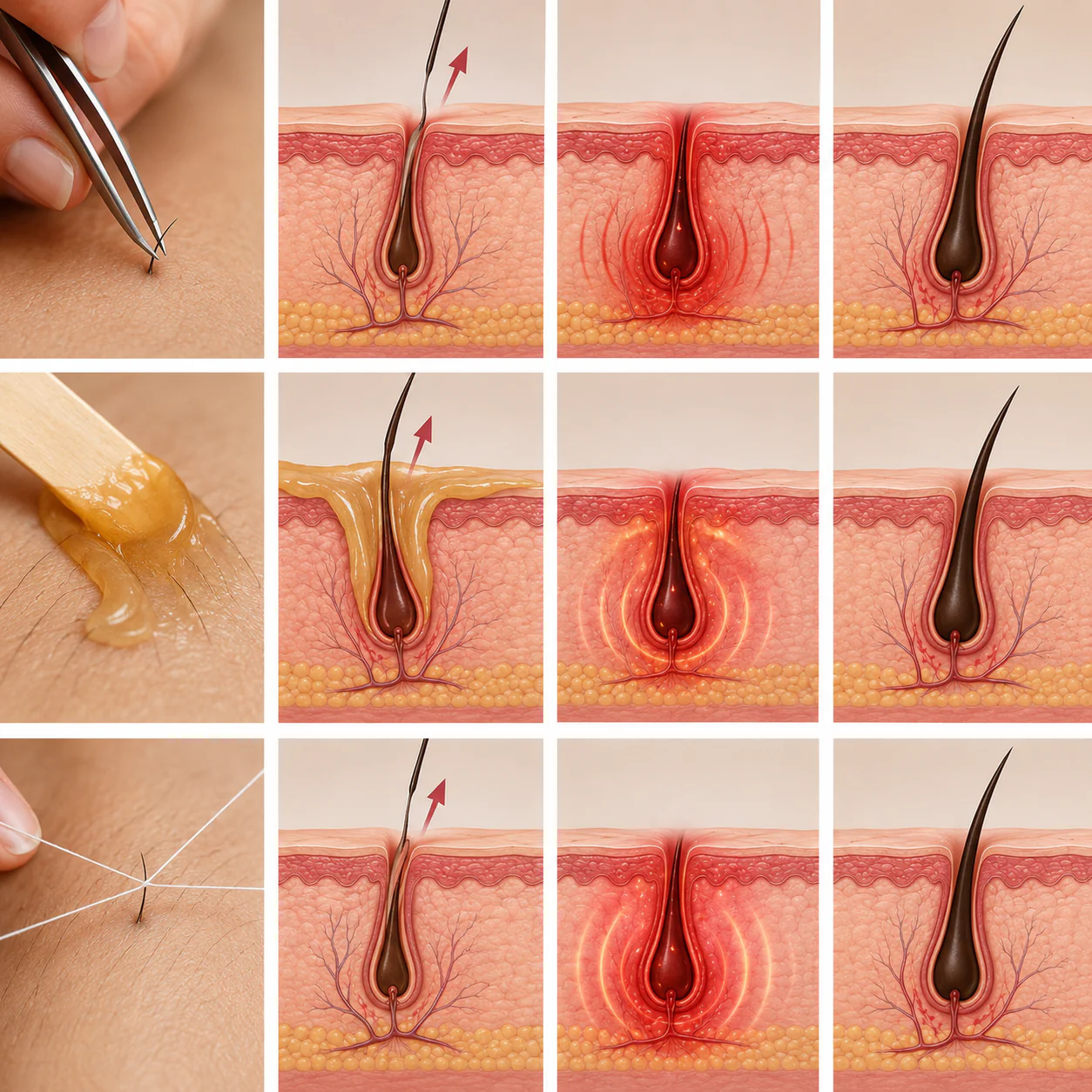
Tweezers, wax and threading: every pull teaches your body to grow stronger hair

Vellea treatment

When you remove a hair by ripping it out from the root — with tweezers, wax or thread — the follicle suffers a micro-trauma.

The body registers that action exactly as it would register a wound: an attack on an area that needs protection. And it responds by reinforcing its defenses.

The follicle receives more blood, more nourishment. The next hair grows back thicker, darker, tougher.

Not because of hormones alone, but as a biological protective response. It's the same mechanism by which skin thickens where it's repeatedly injured in the same spot.

The pulling-trauma cycle — how it gets worse over time

Mechanical pulling — tweezers, wax, thread: the hair is torn out from the root. The follicle registers a wound.

Defensive response — the body sends more blood and nutrients to the follicle to protect the area. It perceives it as a zone under attack.

Stronger hair on regrowth — the follicle produces a thicker, darker, tougher hair to defend against the next pull.

The cycle worsens — every pull makes the next one worse. Year after year, hair that's harder to manage, routines that get longer and longer.

A woman who had a few fine hairs at 25 has dozens of thick, tough ones at 35 — even though she followed every doctor's advice to the letter.

It's not her fault. It's not just the hormones' fault. It's the daily removal method that amplified everything.

"The hormonal cause — PCOS, menopause, post-pregnancy shifts — starts the problem. But it's the removal method that amplifies it every morning, until it becomes unmanageable."

★★★★★

"I used to wake up at 5:30 every morning to pluck them before anyone saw me. After ten years with tweezers, what used to be a few fine hairs had turned into dozens of hairs as tough as wire. I couldn't figure out why it kept getting worse, even though I was doing everything they told me to."

— Julia M., 34 · PCOS · verified buyer

2

The razor seems gentler
but it still triggers a defensive follicle response

The razor doesn't pull the hair out from the root: it cuts it at skin level. That's why many women choose it, thinking it's less traumatic than tweezers or wax.

In part that's true — it doesn't create the same pulling micro-trauma.

But it creates a different problem, just as damaging over time.

A hair cut flush with the skin grows back with a blunt tip, without the natural taper it had before. To the touch — and to the eye — it immediately feels thicker and darker, even though biologically nothing has changed.

But the real problem is something else: frequent shaving stimulates the follicle to produce hair more continuously and rapidly, because the body perceives the constant removal as a signal that it needs to keep production active.

Over time, women who shave their face invariably report the same thing: regrowth gets faster and faster, more visible within just a few hours. The routine becomes more frequent. And leaving the house without shaving becomes impossible.

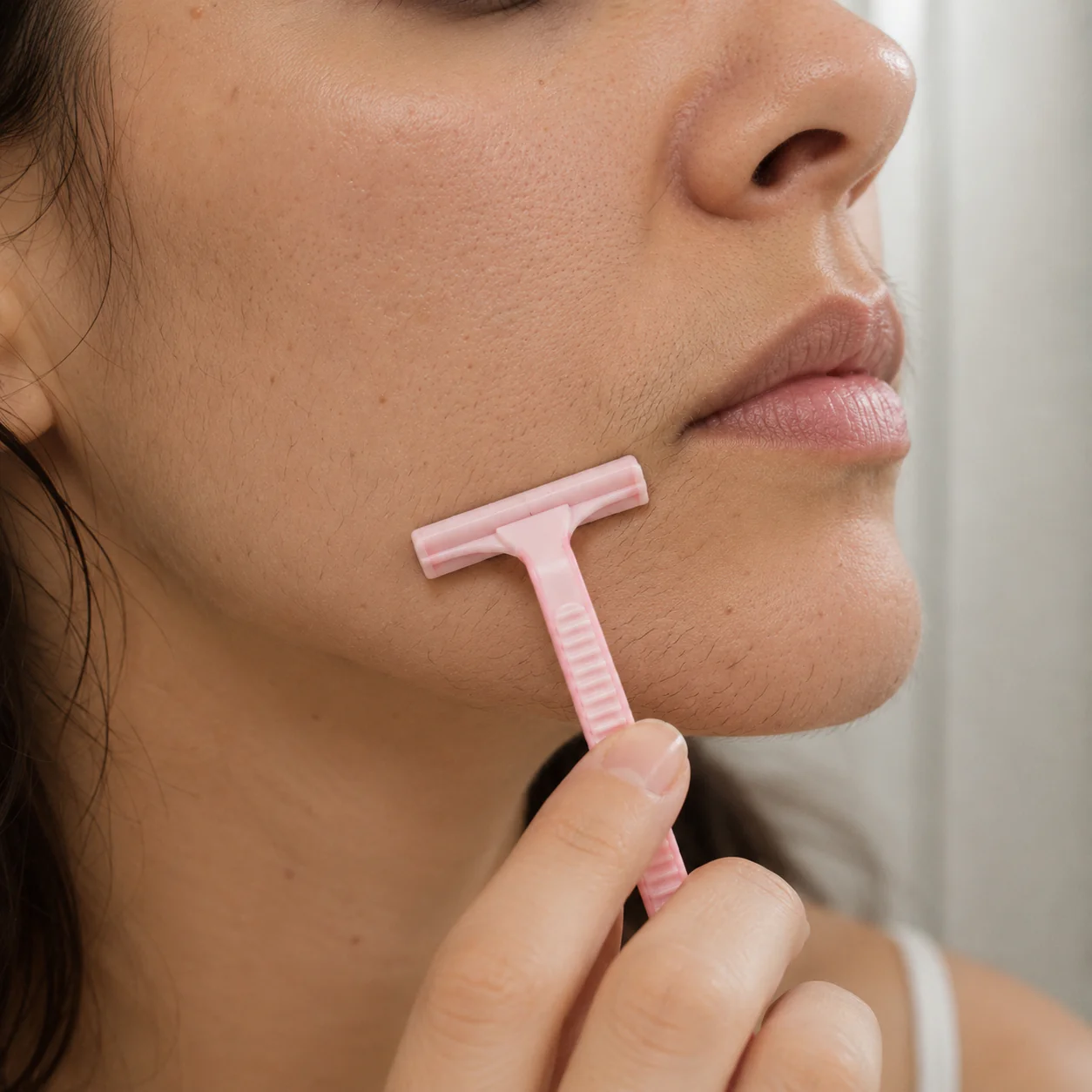
Razor on face
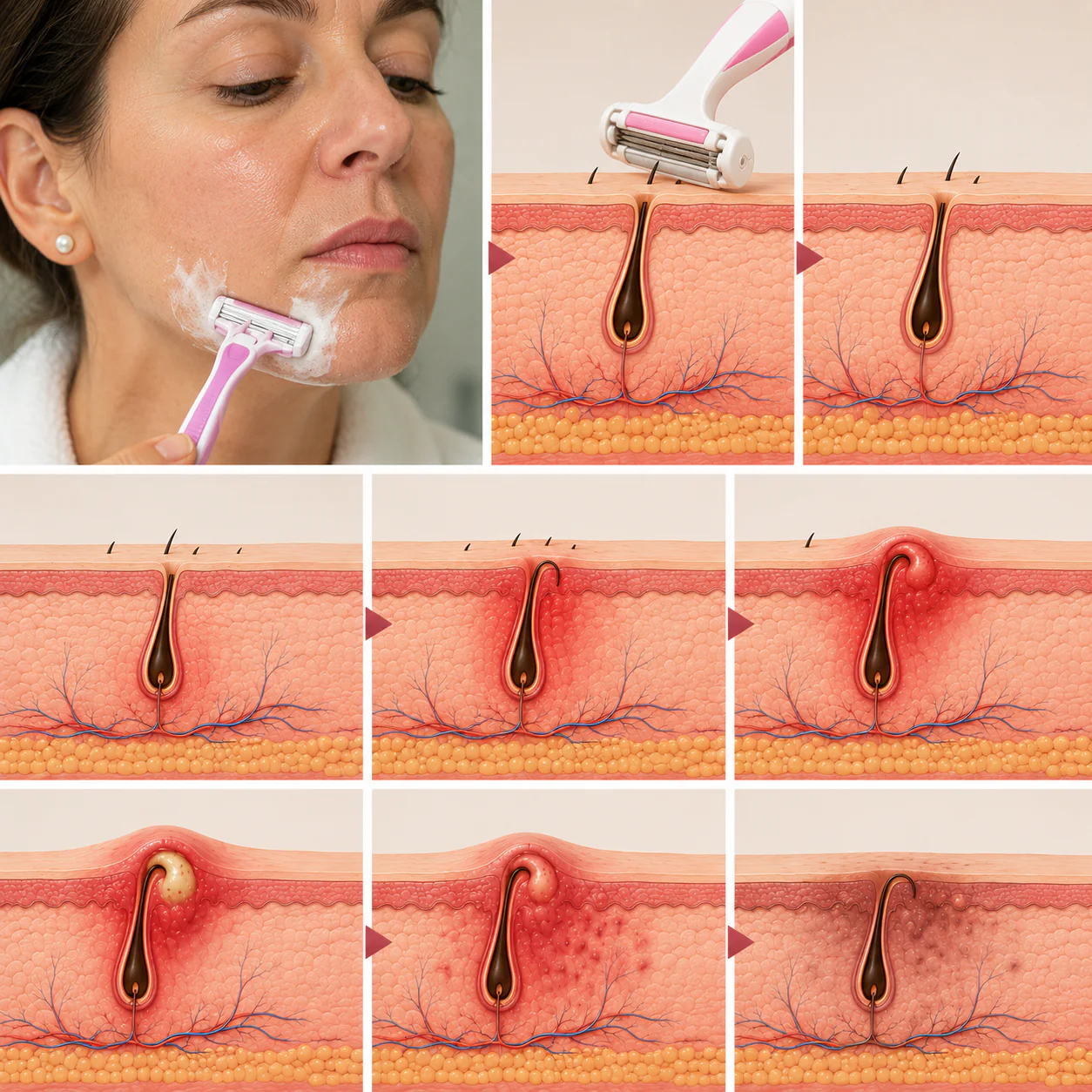
⚠ SHAVING THE FACE — WHAT HAPPENS OVER TIME

Regrowth with a blunt tip: the hair looks thicker and darker within just a few hours.

Continuous follicle stimulation: frequent shaving keeps the follicle in constant production, speeding up growth cycles.

Growing dependence: the more you shave, the more often you're forced to do it. The "smooth-skin" window gets shorter over time.

Effects of shaving on the face
3

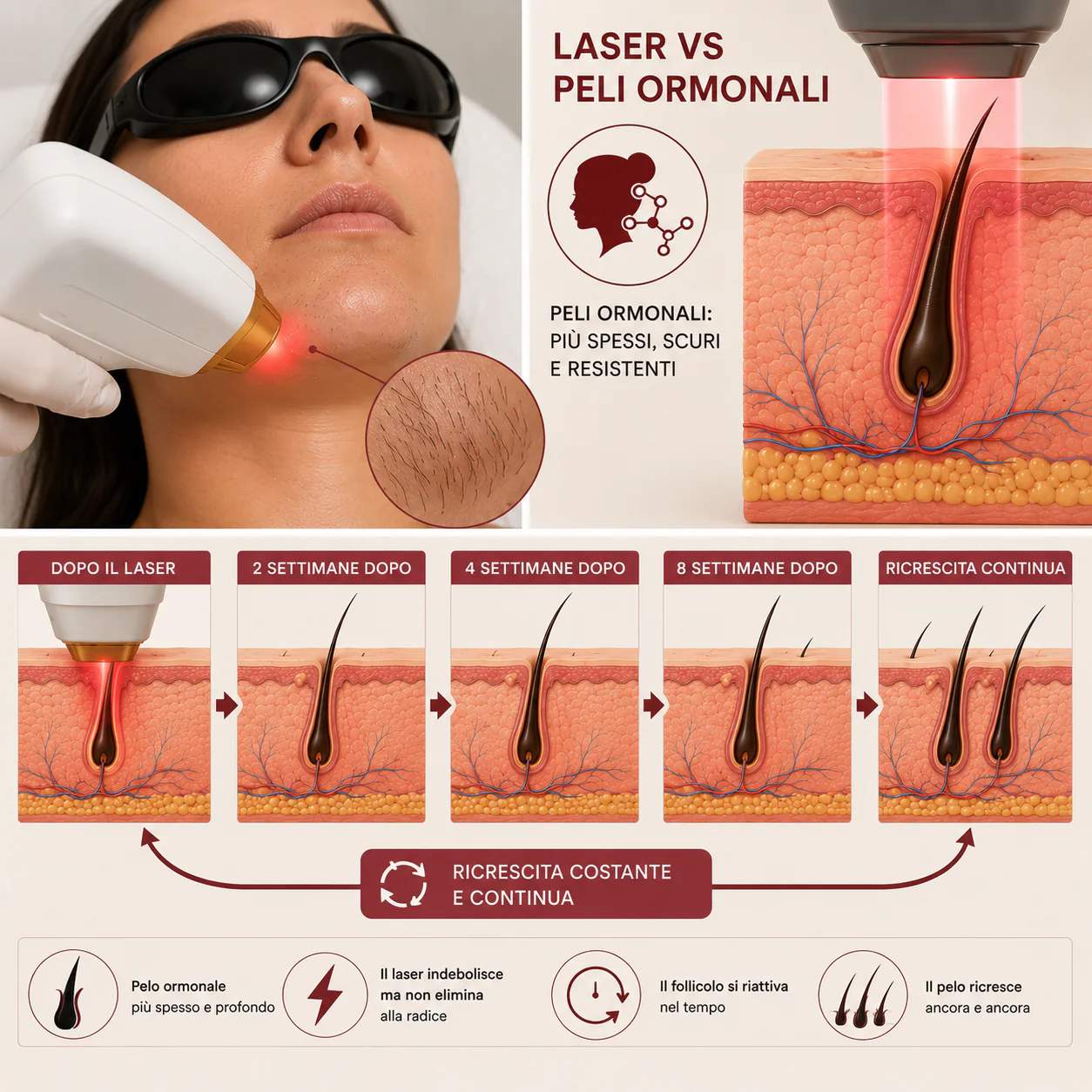
Laser on hormonal hair: why it often makes things worse instead of solving them

Laser hormonal hair

Laser is the most commonly recommended solution from doctors for hormonal facial hair. It's also the one that, in practice, disappoints most often — and in some cases makes the situation significantly worse.

Laser works well on hair with stable roots, not influenced by ongoing hormonal fluctuations. Hormonal hair is different: its growth is constantly stimulated by hormones, even during and after treatment.

Laser can destroy the existing hair, but it can't block the hormonal signal that keeps stimulating new hair.

The result many women see after 8–12 sessions costing hundreds of dollars each is always the same: the hair comes back.

In some cases — the so-called paradoxical laser effect — it comes back thicker than before, because the thermal trauma activated in the follicles the same defensive response that tweezers would have triggered.

The body responded to the thermal aggression by reinforcing hair production.

After months of sessions, appointments and money spent, many women find themselves right back where they started: continuous regrowth, sensitized skin and even more invasive routines.

Not because laser "never works," but because on hormonal hair it doesn't eliminate the cause that keeps feeding it.

"This isn't an isolated case. The paradoxical laser effect on hormonal hair is well documented. The problem is that it's rarely communicated to patients — and almost never before they start treatment."

★★★★★

"I spent $4,200 on laser. Twelve sessions. In the end the hair had come back thicker than before. Nobody warned me that with PCOS, laser could make things worse. I felt betrayed by every doctor who'd recommended it as a permanent solution."

— Roxanne M., 38 · PCOS · verified buyer

The problem isn't just the hair.
It's the way you remove it every day.

The medical system tends to treat hormonal hair as a cosmetic problem to be managed symptom by symptom — tweezers for the hairs, laser to reduce them, medication for the hormones.

But no one ever asks the question that would change everything: "How are you removing them every day?"

Because that answer determines whether the situation will improve or keep getting worse.

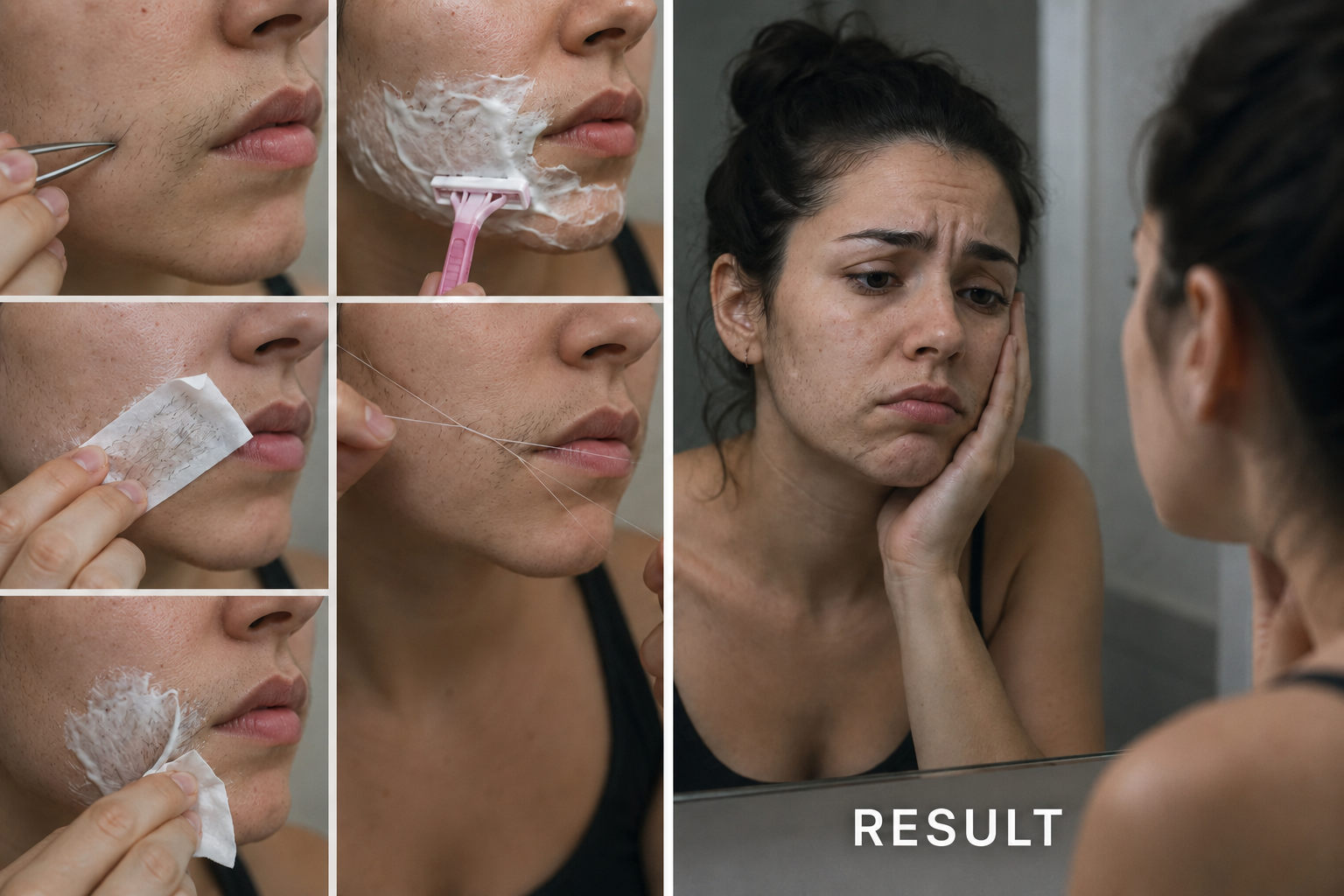
Hair removal methods and the result

It's time to change methods.

Stop stressing the follicle every day and switch to a routine designed to make regrowth visibly thinner, slower and more manageable over time.

Find out how

There is a method that removes hair without traumatizing —
and the follicles actually start to heal

The right question isn't "which method works best to remove hair." The right question is: is there a method that removes it without triggering the follicle's defensive response?

Yes. And it works the exact opposite way from everything you've tried so far.

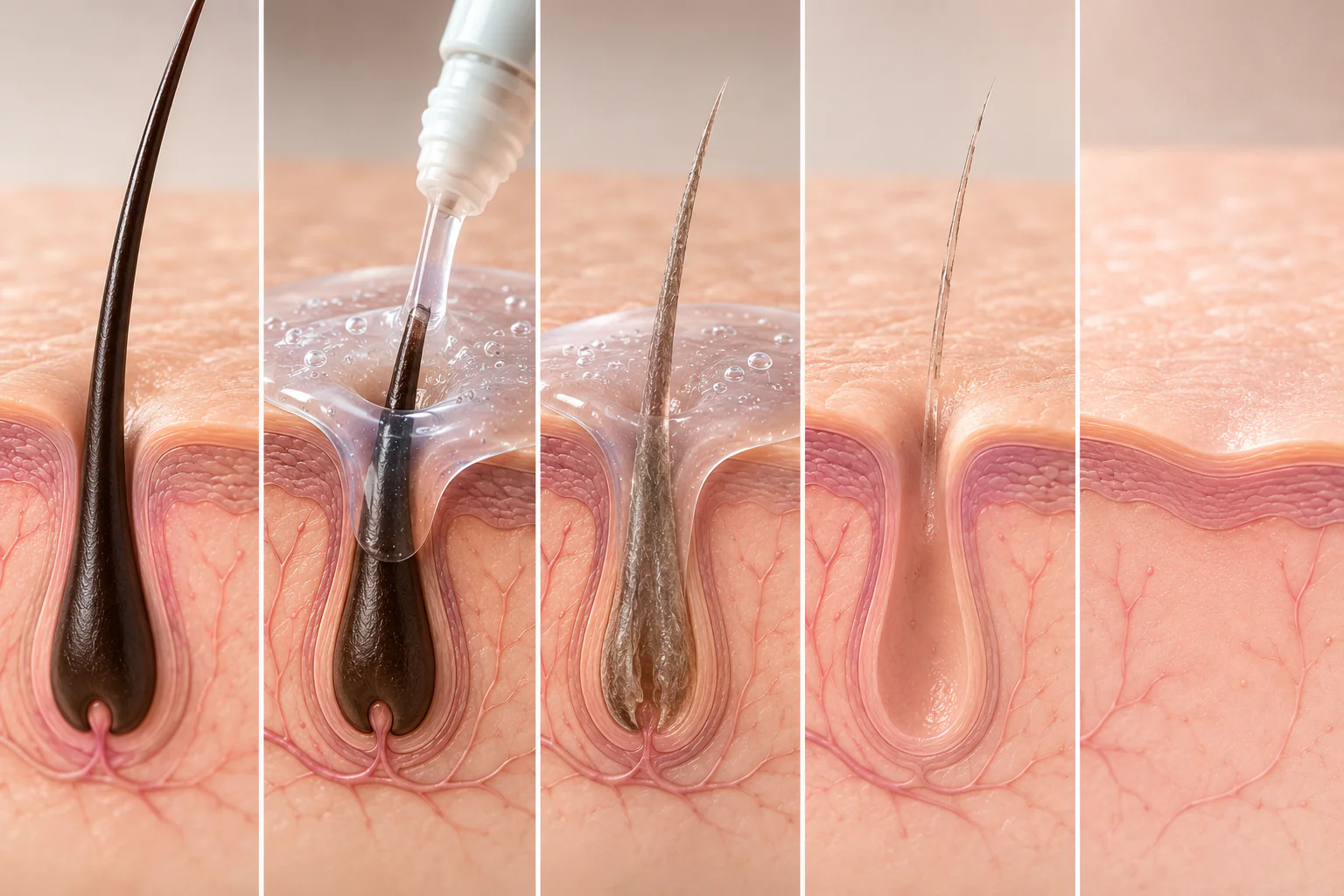
It's called dissolution. Instead of pulling or cutting the hair — with the trauma that follows — dissolution gently breaks down the hair's structure through the skin, with a formula based on natural ingredients.

The hair disintegrates below the surface without the follicle ever being touched. No wound. No danger signal. No defensive response.

The follicle receives no message to protect itself. It has no reason to reinforce.

And over time — without the constant cycle of trauma and defense — hair grows back progressively thinner, not thicker.

Vellea dissolution method

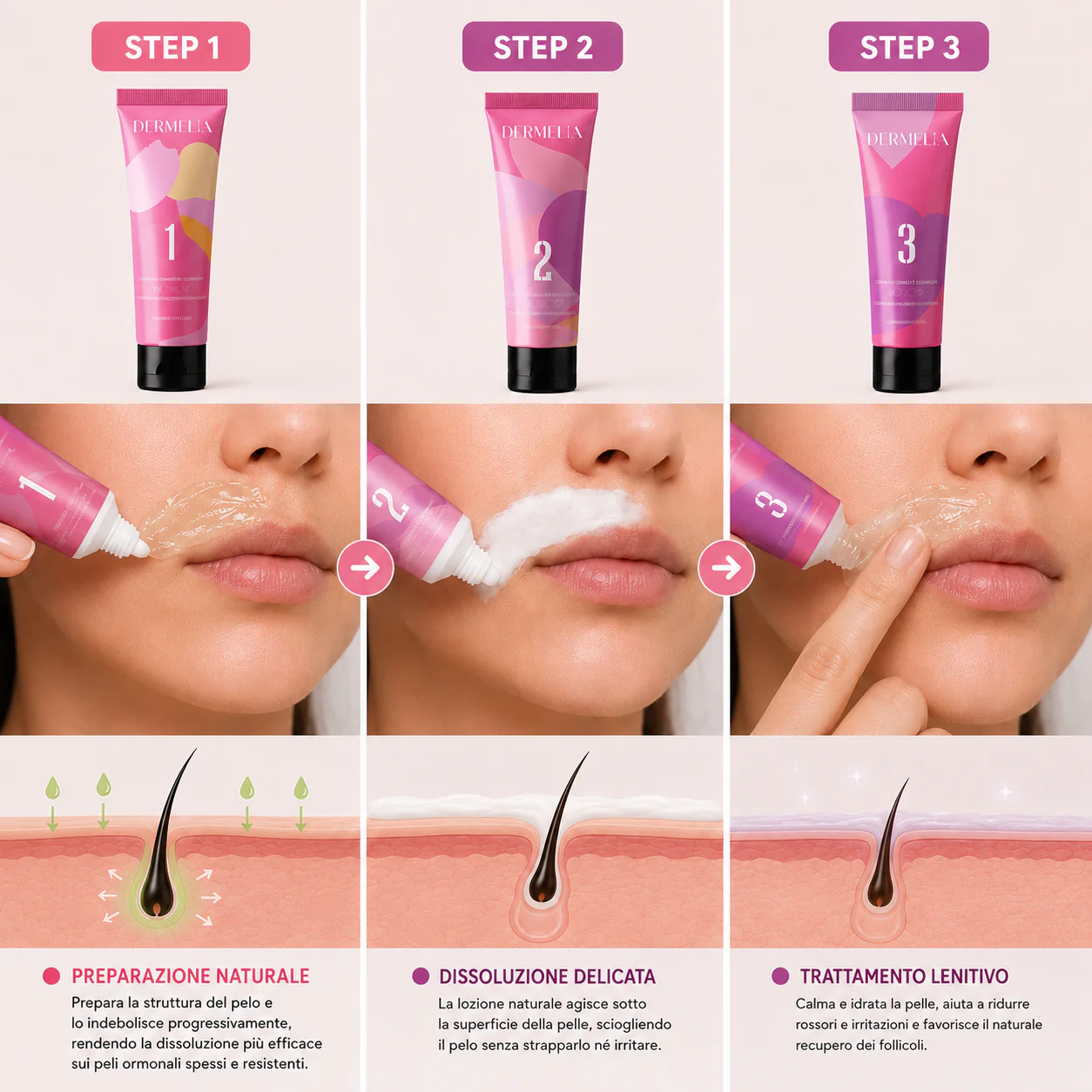
HOW DISSOLUTION WORKS — THE OPPOSITE OF PULLING

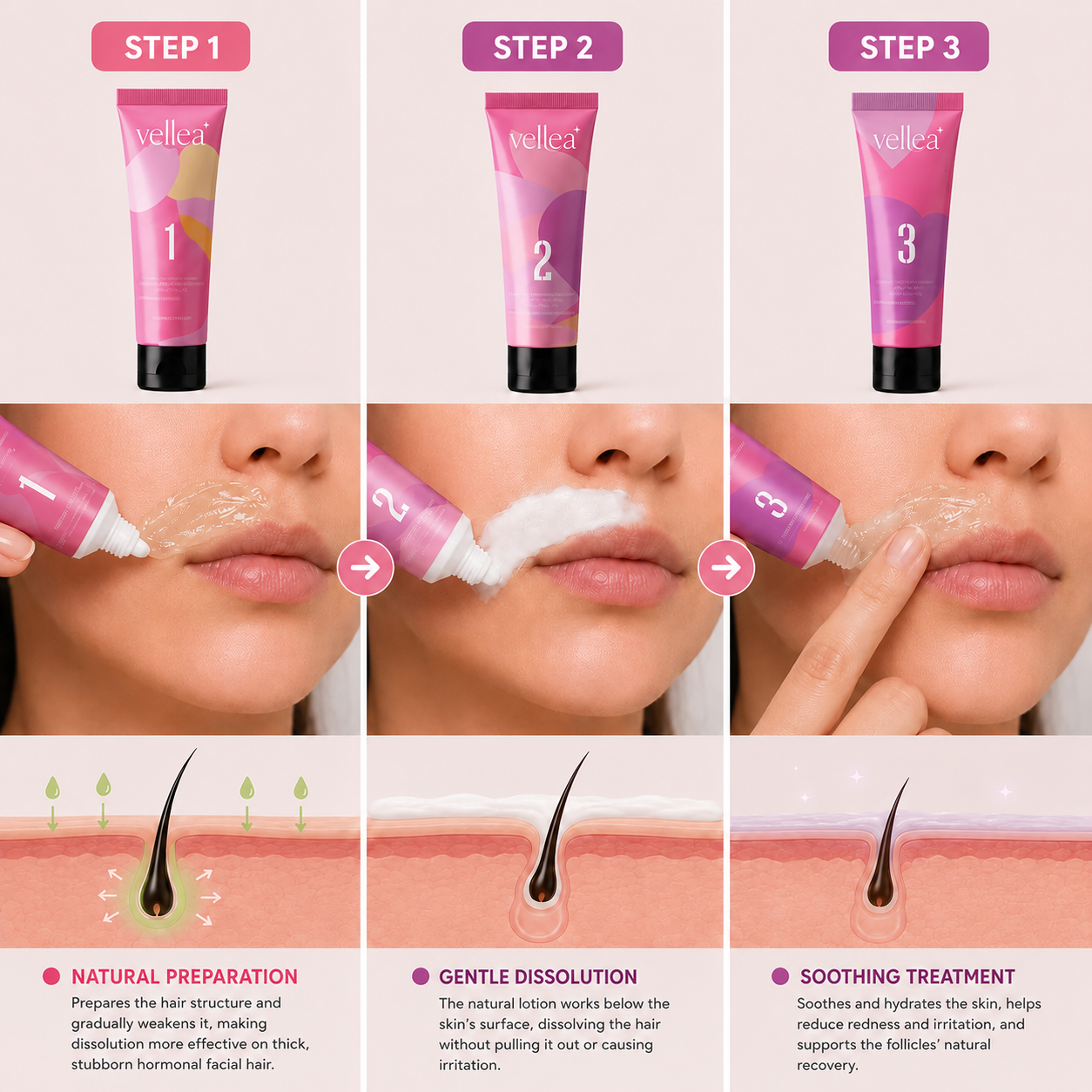
Natural prep — a formula based on botanical extracts softens and prepares the hair structure. Hormonal hair is much tougher than normal hair: this step is essential.

Gentle dissolution — the natural formula breaks down the hair below the skin's surface. No pulling. No contact with the follicle. No defensive response from the body.

Soothing treatment — a post-treatment formula with natural ingredients calms the skin and reduces any residual inflammation, helping the follicles recover over time.

The cycle breaks — without repeated trauma, the follicle stops defending itself. Hair grows back progressively thinner. The situation improves instead of getting worse.

Vellea 3-step routine

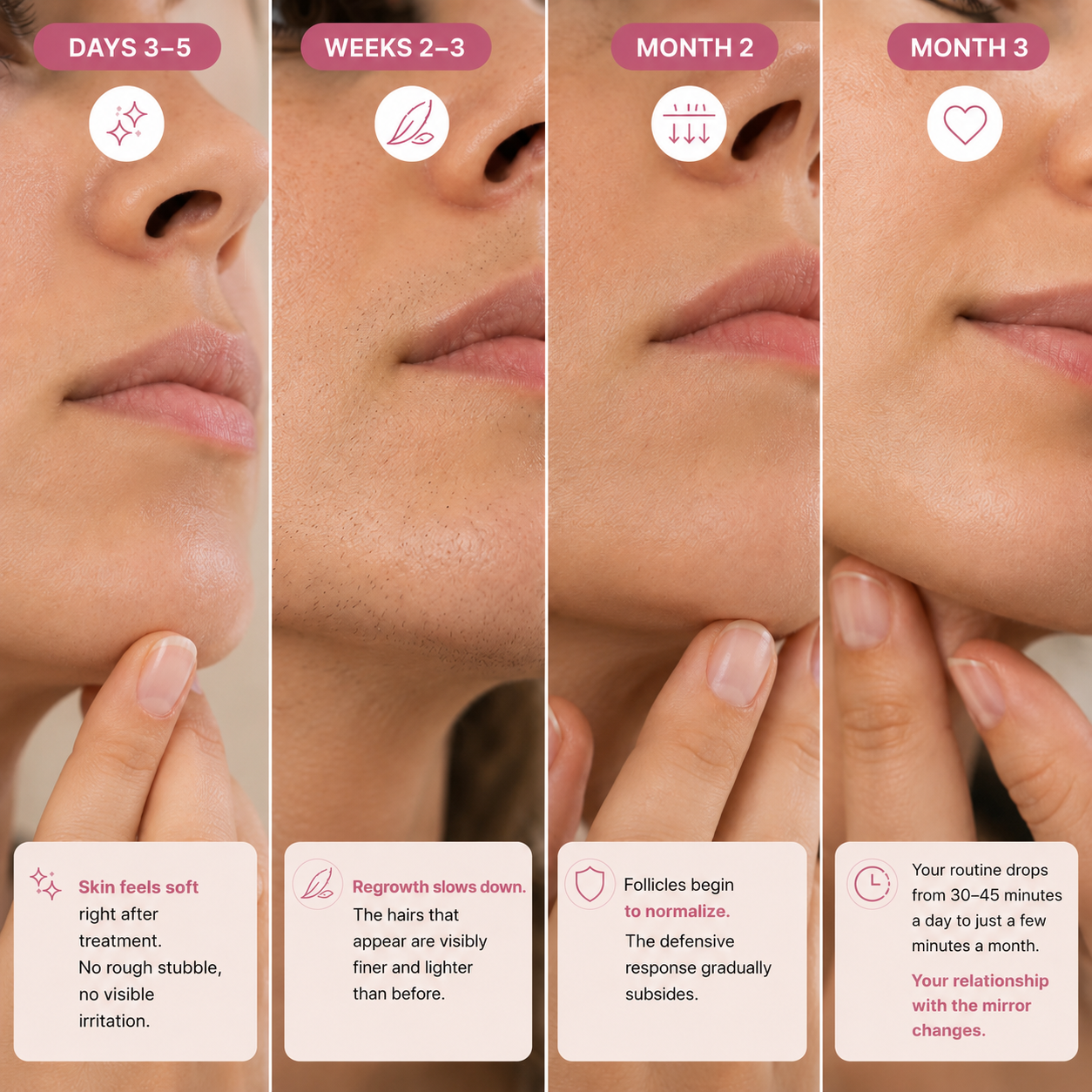
The pattern I see in women who break the trauma cycle:

Vellea transformations

Days 3–5
The skin is soft right after treatment. No stubble, no visible irritation.

Weeks 2–3
Regrowth slows down. The hairs that appear are visibly thinner and lighter than before.

Month 2
The follicles start to normalize. The defensive response fades progressively.

Month 3
The routine drops from 30–45 minutes a day to a few minutes a month. Your relationship with the mirror changes.

This method exists and it's called Vellea Kit Trilogy: three complete phases, natural formula, developed specifically for thick, resistant hormonal hair.

What women are saying

★★★★★

"I've been plucking my chin hair every morning since I was 16. I'm 27 now. That's 11 years. By week 8 I had maybe 4 or 5. I used to pull out more than 25. I have to admit I got a little emotional."

— Rebecca C., verified buyer
★★★★★

"During menopause, facial hair became the first thing I thought about every morning. After six weeks my routine went from 40 minutes a day to just a few minutes. For the first time in years I feel like things are actually improving."

— Anna D., verified buyer
★★★★★

"Nobody warns you that perimenopause brings chin hair with it. Before taking the kids to school, I'd pluck it out with tweezers every morning. After 8 weeks, now I pluck maybe twice a week. One less thing to worry about in the morning."

— Sandra S., verified buyer

Vellea isn't another depilatory cream —
and it's important to understand why

When you hear "depilatory cream," the immediate reaction is skepticism. And it's understandable: standard depilatory creams have been around for decades, we've tried almost all of them, and the result is always the same — they barely work on fine leg hair, and they're completely ineffective on thick hormonal facial hair.

Vellea is built on a completely different premise, and the difference isn't one of degree — it's one of category.

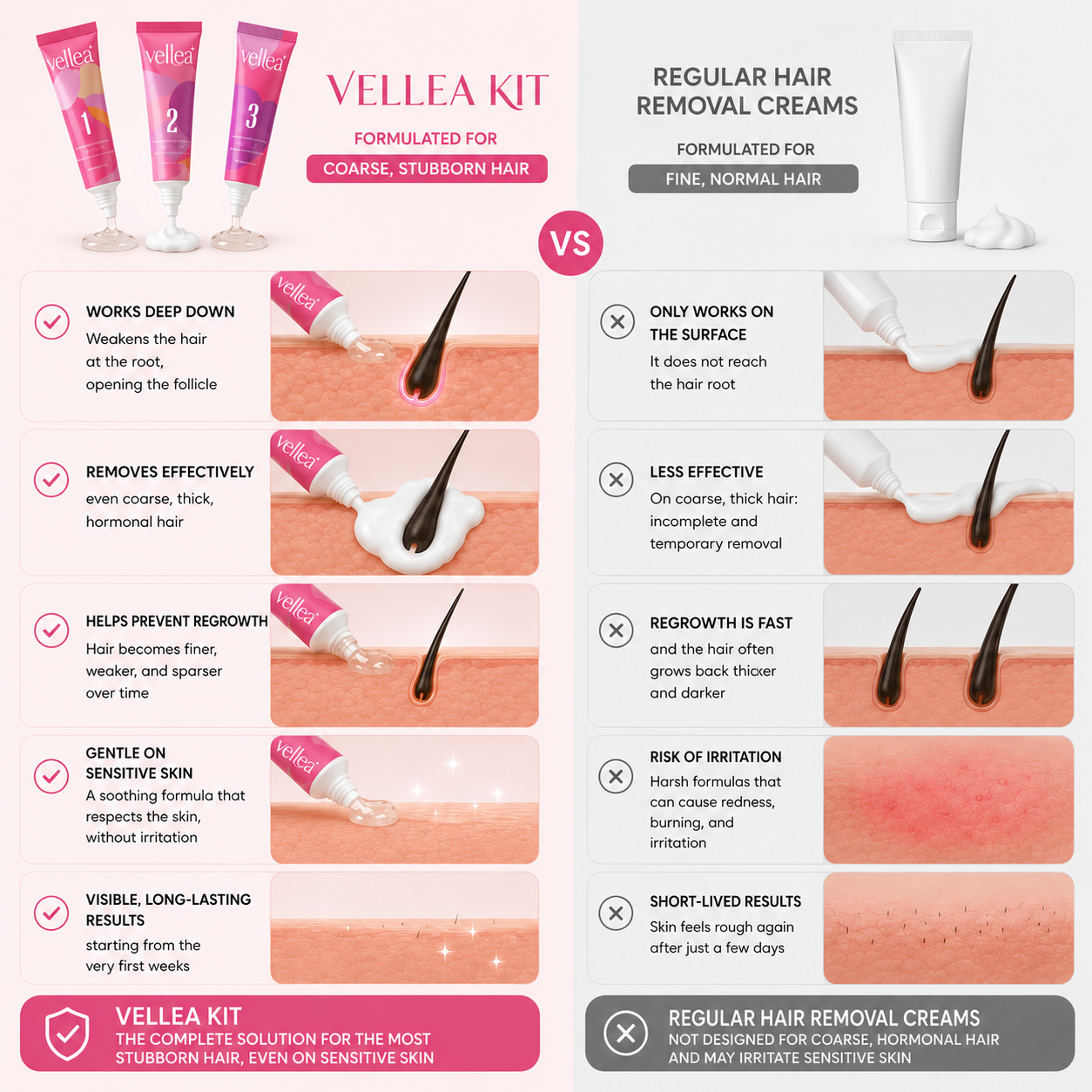
Vellea Kit vs regular hair removal creams
Vellea treatment

Formulated specifically for thick, resistant hormonal hair — not for fine leg hair.

3-phase system with pre-treatment: standard creams have no prep step; Vellea opens up the hair structure before it acts.

Clinical-strength active ingredients: strong enough to dissolve dense hormonal hair, not just fine hair.

Post-treatment soothing formula: no standard cream includes a recovery phase for the skin.

Designed for continuous use that improves over time — not for one-off removal.

You feel the difference from the very first application. And you see it in the weeks that follow — not because Vellea works "magic," but because it's the first method that stops feeding the problem instead of making it worse.

LIMITED STOCK — only a few units left
NO RISK — 60-DAY GUARANTEE

Break the trauma cycle.
Start improving instead of getting worse.

Complete Trilogy Kit — 3 natural phases for hormonal hair
PCOS • Menopause • Hormonal shifts • Post-pregnancy

Vellea Kit Trilogy
Try Vellea risk-free →
✓ 60-day satisfaction guarantee or your money back
✓ Fast shipping across the US
✓ Dermatologist-tested
100% satisfaction guaranteed or your money back

Frequently asked questions